How to become a healthcare researcher?
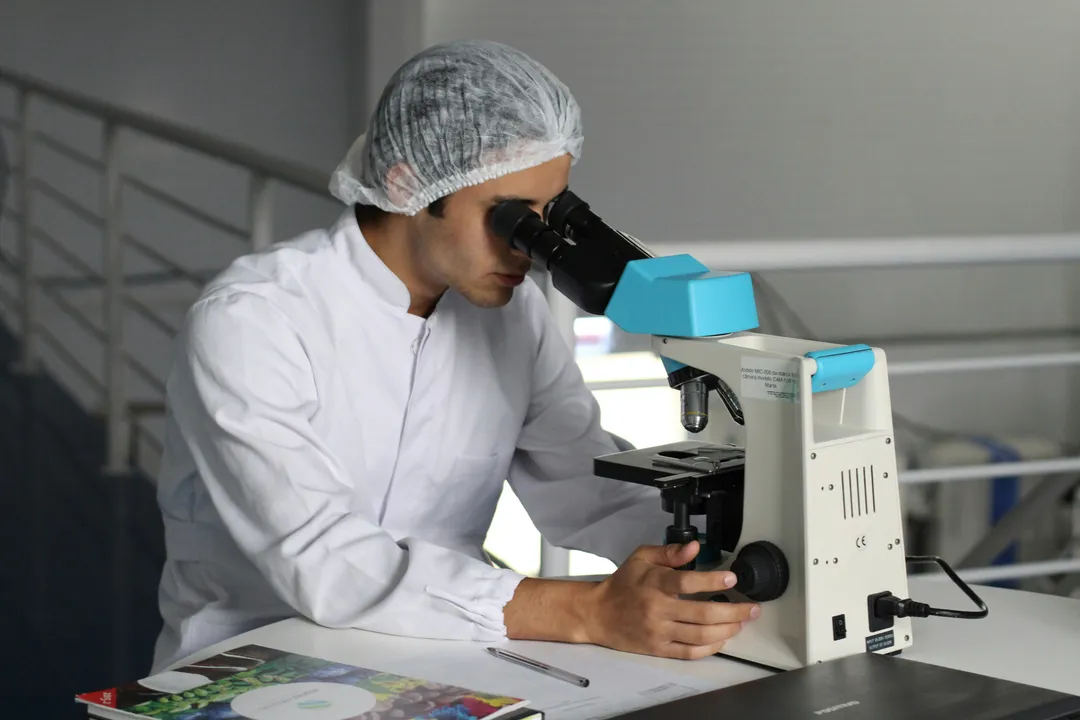
The path to becoming a healthcare researcher is paved with rigorous academic preparation, specialized training, and a deep commitment to advancing human health through scientific inquiry. Whether one is drawn to the fundamental mechanisms of disease, the broad scope of community well-being, or the precise testing of new interventions, there are distinct educational and experiential routes to follow. Researchers in this field operate in diverse settings—from academic laboratories and government agencies to pharmaceutical companies and hospitals—all aiming to generate knowledge that improves patient care and public health outcomes. [3][4]
# Education Base

The foundational requirement for nearly all high-level research positions involves advanced formal education. This is not a field where a bachelor's degree is typically the final step for conducting independent research. In fact, many roles designated as "Medical Scientist" strongly suggest or mandate a terminal research degree. [1]
For those pursuing roles as medical scientists—who often conduct basic or applied research to understand diseases and develop new treatments—the expected credentials are quite high. A Doctor of Philosophy (Ph.D.) is a common entry point, often followed by post-doctoral training to establish independence. [1][6] Alternatively, individuals holding both a medical degree (M.D.) and a research doctorate (Ph.D.) are highly valued, as this dual qualification allows them to bridge the gap between the laboratory bench and the patient bedside, a field sometimes referred to as physician-scientist training. [1]
When looking at community forums discussing necessary education, the consensus reinforces the need for a significant commitment. For medical research specifically, candidates frequently mention that a Ph.D. is the expected terminal degree for the title of Medical Scientist, though the path can vary depending on the specific sector, such as industry versus academia. [2]
In contrast, the requirements for other specialized research areas might offer slight flexibility, though advanced degrees remain standard. For instance, a Public Health Researcher, whose work focuses more on population health issues, policy, and epidemiology, will typically require a Master of Public Health (MPH) or a related advanced degree, such as a Master of Science (MS) or a Ph.D. in public health disciplines. [5] This degree focuses on understanding health patterns across large groups and developing interventions at a societal level, rather than solely focusing on molecular or cellular biology which dominates the medical scientist track. [5]
For those interested specifically in Clinical Research, which involves conducting studies in human subjects—like clinical trials—the educational background can sometimes be a Master’s degree focused on clinical research management or science, although those with M.D.s, Ph.D.s, or Pharm.D.s are also heavily recruited. [8] The key difference here is often the type of knowledge emphasized: while a Ph.D. in molecular biology emphasizes hypothesis generation from first principles, a Master's in Clinical Research might emphasize regulatory compliance, data management, and protocol execution. [8]
Here is a comparison of typical degree emphasis across the major research tracks:
| Research Track | Primary Degree Goal | Typical Focus Areas |
|---|---|---|
| Medical Scientist | Independent Discovery | Molecular Biology, Immunology, Pharmacology, Basic Science [1][6] |
| Public Health Researcher | Population Impact | Epidemiology, Biostatistics, Health Policy, Environmental Health [5] |
| Clinical Researcher | Human Intervention Testing | Protocol Design, Regulatory Affairs (FDA/IRB), Trial Management [7][8] |
The decision between these paths is crucial early on. Spending five to seven years obtaining a Ph.D. sets one on a trajectory aimed at generating entirely new knowledge, while obtaining a specialized Master's in Clinical Research might allow faster entry into managing trials, focusing on execution and oversight rather than fundamental discovery. [4] Understanding this time commitment versus career objective is one of the most important initial analyses a prospective researcher must undertake.
# Career Paths

The title "healthcare researcher" is broad, encompassing roles that investigate the why (basic science), the how (clinical translation), and the who/where (public health impact). The Bureau of Labor Statistics (BLS) classifies Medical Scientists, who are representative of many laboratory-based researchers, as individuals who conduct research either independently or supervise research activities. [3] These positions often require applicants to have a strong publication record demonstrating their ability to conduct independent research. [4]
# Medical Science
Medical scientists often work to improve human health by studying diseases and developing new diagnostic tools or therapies. [1] Their work may involve laboratory experiments, analyzing biological samples, and publishing findings in peer-reviewed journals. [6] The ultimate aim is often translational—moving findings from the lab setting into practical clinical applications, though much research remains purely foundational. [1] Medical scientists are employed across various sectors, including the federal government, universities, hospitals, and commercial enterprises like pharmaceutical and biotech firms. [3]
# Public Health Focus
Public health research takes a wider lens. A public health researcher investigates health issues affecting entire populations, seeking to understand disease patterns, risk factors, and the effectiveness of health promotion programs or policies. [5] Their work is essential for shaping governmental regulations, community interventions, and resource allocation. While a medical scientist might study why a specific virus attacks lung cells, a public health researcher studies how that virus spreads through a community and what public measures best contain it. [5]
# Clinical Trials
Clinical research focuses intently on human subjects. This area is dedicated to testing the safety and efficacy of new drugs, devices, or behavioral interventions developed through basic research. [7] Getting into this area often involves understanding the five essential steps outlined by some academic centers: first, identify the research question; second, design the study protocol; third, seek ethical and regulatory approval (like Institutional Review Board or IRB approval); fourth, recruit and enroll participants; and finally, analyze and report the data. [7] This is a highly regulated area where adherence to strict protocols is non-negotiable. [8]

# Building Experience
Formal education provides the theory, but practical experience often dictates who gets hired. Employers look for demonstrated aptitude, which is typically showcased through hands-on work during the degree process and immediately following it. [4]
# Academic Research
During doctoral studies, securing research assistantships or working within a principal investigator’s (PI) lab is vital. This period should be treated as an apprenticeship. A prospective researcher should aim to contribute meaningfully to publications, as first-author papers are currency in academia and often in industry. [4] If pursuing a Ph.D., the dissertation project must be treated as an independent research endeavor, demonstrating the capacity to manage a project from conception to completion. [6]
For those currently in a degree program or having recently graduated, exploring pre- or post-doctoral training opportunities funded by large organizations can significantly bolster a CV. For example, the National Institutes of Health (NIH) provides various training programs designed to bridge the gap between formal education and an independent research career, offering structured environments for skill development. [9] These opportunities expose researchers to high-level mentorship and large-scale projects.
# Industry and Clinical Exposure
Even for those leaning toward basic science, gaining exposure to clinical research principles can provide a unique advantage. Understanding the regulatory landscape—how a compound moves from the bench to a Phase I trial—is invaluable, regardless of one's primary discipline. [7][8]
One actionable step often overlooked is seeking out internships or short-term research rotations outside one’s primary academic department. If your Ph.D. is in immunology, volunteer a few hours a week assisting a biostatistician or a regulatory affairs specialist. This cross-pollination of skills provides a more nuanced view of the entire research ecosystem. It shows future employers an appreciation for the non-bench aspects of science, such as data integrity and compliance, which are paramount in funded and regulated research. [4]
For clinical research entry specifically, experience in data management, patient coordination, or regulatory submission preparation is highly sought after, sometimes even replacing the need for a specialized Ph.D. if the candidate possesses a relevant Master’s and significant hands-on work as a Clinical Research Coordinator (CRC) or similar role. [8]
# Essential Skills Development
While specific technical skills vary immensely based on the research focus—be it mass spectrometry for a medical scientist or SAS programming for a biostatistician in public health—several core competencies are universally required for success in healthcare research.
# Technical Mastery
A researcher must be proficient in the analytical methods relevant to their field. This means fluency in statistical analysis is almost a given for anyone interpreting trial data or population health trends. [5] If you are working in a lab, mastery over the specific instrumentation and protocols is necessary to ensure reproducible results, which is the bedrock of scientific trust. [6] Weak technical skills lead to irreproducible data, which severely hampers career progression.
# Communication
Research findings are meaningless if they cannot be effectively conveyed to peers, grant agencies, or the public. Strong writing skills are mandatory for producing grant proposals, manuscripts, and regulatory documents. [4] Furthermore, researchers must be adept at oral presentations, defending their methodology and findings in seminars or conferences. Developing the skill to explain highly complex biological or statistical concepts to a non-specialist audience—such as a review board or a journalist—is a skill often neglected in technical training but highly valued by hiring managers. [1]
# Grant Writing and Funding
For academic researchers, the ability to secure external funding is synonymous with career survival. Learning to write compelling grant proposals—demonstrating not only a sound idea but also a feasible plan, a capable team, and a clear budget—is a critical, learned skill separate from running experiments. [4] Many graduate programs do not adequately teach the "business" of science. A crucial self-assessment involves finding mentors who are successful at writing federal grants and actively participating in drafting sections of those grants, even if you are not the PI. This hands-on approach to the financial side of science is one of the most direct ways to build authority in an academic setting.

# Navigating the Job Market
The employment outlook for medical scientists, according to the BLS, is projected to grow faster than the average for all occupations, indicating consistent demand for skilled researchers. [3] However, the specific environment where one lands dictates daily life and career trajectory.
# Academic Versus Industry Roles
Academic research positions often involve a heavier teaching load or a greater emphasis on pure discovery, with success measured by publications and grant acquisition. [6] Postdoctoral fellowships are the common bridge between the Ph.D. and a permanent faculty position, offering lower pay but immense freedom to develop an independent research niche under guidance. [9]
Industry research, particularly in pharmaceuticals or biotechnology, tends to be more focused on product development, such as creating and testing new drugs or devices. [3] These roles often offer higher salaries sooner but may have deliverables tied to commercial timelines, which can sometimes feel more rigid than an academic timeline centered around grant cycles. [4]
For example, a Ph.D. trained in molecular biology might find that in academia, they spend 60% of their time on grant writing and lab management, while in industry, that time shifts to assay development and in-house project milestones. One source noted that for those aiming for medical science, the career trajectory often involves securing one's own funding source or leading a division within a larger organization. [1]
# Entry into Clinical Research Organizations
For those pursuing clinical research without an M.D. or Ph.D., joining a Contract Research Organization (CRO) or a dedicated site management organization is a common entry point. [8] These organizations execute trials on behalf of pharmaceutical sponsors. Roles here are process-driven, ensuring adherence to Good Clinical Practice (GCP) guidelines and overseeing patient safety during trials. [7] While the required education may sometimes be a Bachelor's degree combined with a certification (like a CCRP), Master’s degrees in clinical research management are increasingly seen as preparing candidates more thoroughly for leadership roles within these organizations. [8]
The job search itself requires tailoring your approach. A CV for an academic position emphasizes publications and research independence, whereas a resume for an industry or CRO role should highlight specific project management skills, regulatory experience, and success metrics related to efficiency or trial completion rates. [4]
# Commitment and Outlook
Becoming a healthcare researcher is a long-term commitment that demands intellectual curiosity and resilience in the face of repeated failure, which is inherent to the scientific method. [6] The process of asking a question, designing an experiment, finding that the hypothesis was wrong, and starting over is repeated countless times. A successful researcher develops the tenacity to view negative results not as dead ends, but as data points guiding the next line of inquiry.
Furthermore, maintaining ethical standards is non-negotiable. Research integrity, from data recording to subject protection, underpins the entire endeavor. Violations in this area can instantly terminate a promising career, regardless of technical brilliance. [7] Researchers must remain committed to transparency and responsible conduct throughout their tenure. [6]
Ultimately, the decision to enter healthcare research means signing up for continuous learning. The scientific landscape evolves rapidly; yesterday’s gold standard technique may be obsolete tomorrow. Therefore, the best researchers are those who actively seek out new training—whether formal courses, specialized workshops, or simply dedicating time to reading the latest journals—to keep their expertise current and their perspective fresh. The NIH training resources serve as a reminder that even established institutions recognize the need for ongoing development, suggesting that formal education is merely the beginning of a lifelong process of skill acquisition. [9] This dedication to perpetual learning is what keeps the entire field moving forward, transforming the understanding of health and disease into tangible benefits for society.
Related Questions
#Citations
How to Become a Medical Scientist | AUC School of Medicine
What education is required to be a medical researcher? - Reddit
Medical Scientists : Occupational Outlook Handbook
How to Become a Medical Researcher (And Salary Expectations)
How to Become a Public Health Researcher
How to Become a Medical Scientist: A Guide for Teens | Outset
5 Steps to a Career in Clinical Research
How to Get Into Clinical Research: A Comprehensive Guide
Training Opportunities | National Institutes of Health (NIH)