Who invented the modern hospital system?
The history of the modern hospital is not the story of a single inventor or a lightbulb moment. Instead, it is the result of thousands of years of trial, error, and changing societal needs. If you look for a singular creator, you will find only a progression of ideas that transformed places of refuge for the poor into centers of advanced medical science. [1]
The concept of the hospital has shifted its purpose several times: from religious sanctuaries where the sick went to pray for divine intervention, to charitable hospices for the destitute, and finally to the scientific, data-driven institutions we rely on today. [1][2][3]
# Ancient Origins

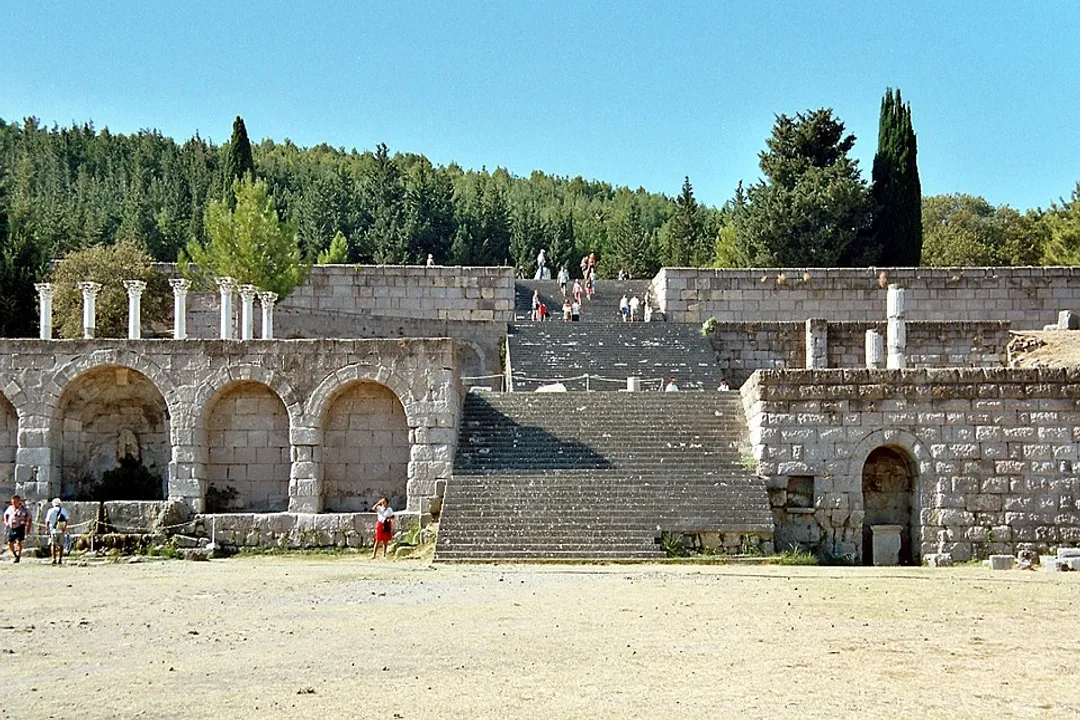
Long before modern medicine, humanity sought ways to manage the sick. In Ancient Egypt, temples often acted as centers for healing, combining ritual with rudimentary medical practices. [1] Similarly, the Ancient Greeks established Asclepieia—healing temples dedicated to the god of medicine, Asclepius. [1] These sites were not hospitals in the sense of curing disease through science; they were spaces for rest, diet, and spiritual rituals designed to invite divine healing. [7]
Ancient India also presents some of the earliest records of organized medical care. Under the reign of Emperor Ashoka in the 3rd century BCE, the region saw the development of institutions that provided medical aid, which were perhaps the first state-sponsored structures dedicated to public health. [1] These early systems focused on accessibility and community welfare, setting a precedent that the health of the public was a concern for the state.
# Islamic Innovation
To understand the architecture of the modern hospital, one must look to the medieval Islamic world. Between the 8th and 12th centuries, the Bimaristan (a Persian term meaning "house of the sick") emerged as a significant advancement. [5] Unlike the earlier religious sanctuaries that relied on miracles, the Bimaristans were explicitly designed for clinical outcomes.
These institutions were the first to implement features we consider standard today: they were open to all, regardless of race, religion, or gender, and they were staffed by trained physicians. [5] More importantly, they were organized into specific departments. A Bimaristan typically included wards separated by disease type, a pharmacy for compounding medications, and a dedicated library for teaching medical students. [5] This structural organization was a massive leap forward, treating the hospital not just as a place to die in peace, but as a place to actively manage and cure illness through empirical study. [10]

# Charitable Roots
While the Islamic world pioneered the clinical ward system, Western Europe developed a different, parallel tradition rooted in charity. Early Christian history saw the rise of the xenodochia, which were essentially guesthouses for travelers and the poor. [7] Over time, these institutions expanded their mission to include the care of the sick and elderly. [3]
During the Middle Ages, hospitals in Europe were often attached to monasteries. [7] The goal here was religious service rather than clinical medicine. The "nursing" provided was intended to save the soul as much as, or perhaps more than, the body. [3] These institutions were communal spaces, often housing the sick, the poor, the orphaned, and the elderly under one roof. It was not until much later that the hospital began to segregate patients based on the nature of their illness rather than their social status. [6]
# Scientific Revolution
The transition to the modern "scientific" hospital occurred primarily during the 18th and 19th centuries. As medical knowledge advanced, the hospital stopped being a charity ward and became a laboratory for observation. [2]
Two major factors forced this change: the advent of germ theory and the professionalization of nursing. Before the 1800s, hospitals were notoriously dirty places where cross-contamination was common. The work of figures like Florence Nightingale in the mid-19th century completely redefined the hospital environment. [2] She emphasized proper ventilation, sanitation, and record-keeping, which turned these facilities from dangerous warehouses into environments where recovery was actually possible. [2]
The following table summarizes the shift in the "hospital mission" over time:
| Era | Primary Goal | Focus | Typical "Patient" |
|---|---|---|---|
| Ancient | Spiritual relief | Divine intervention | Pilgrims/Believers |
| Medieval | Charity/Shelter | Moral care | The poor/Destitute |
| Bimaristan | Clinical recovery | Medical training | Anyone sick |
| Modern | Cure/Prevention | Germ theory/Tech | The patient/Consumer |

# Architectural Evolution
A subtle but crucial aspect of hospital evolution is the architecture itself. When you walk into a modern hospital, the layout is designed for efficiency and safety. However, this was not always the case. Early designs were often "Nightingale Wards"—large, open rooms with windows on both sides to allow for cross-ventilation. [6] The goal was to dilute the "miasma," or bad air, that people once believed caused disease. [2]
As we learned about germ theory, the architecture changed. Open wards were replaced by smaller, enclosed rooms to isolate pathogens. This shift reflects a move from collective care to individualized, risk-managed care. Today, hospital architecture is increasingly modular. We design spaces that can be converted from standard care to intensive care units in a matter of hours, an adaptation driven by the lessons learned during modern health crises.
# Patient Experience
One of the most drastic changes in the hospital system is the agency of the patient. In the medieval era, the patient was a recipient of charity, often with little say in their treatment. In the 21st century, the patient is a consumer. This shift has forced hospitals to adopt features that were unheard of even a century ago: patient privacy, informed consent, and comfort amenities.
Original analyses of health system designs suggest that the modern hospital faces a unique conflict: balancing the "factory" model—where efficiency and throughput are kings—with the "home" model, where patients demand personalized, empathetic care. This tension is likely the next frontier in hospital design. We are seeing a move toward "hospital-at-home" programs, where the walls of the hospital are effectively dismantled, and high-tech care is delivered in the living room. [10]

# Institutional Legacy
Who then, really invented the modern hospital? If we define the hospital as a place for sick people to rest, the Ancient Egyptians and Greeks were the early adopters. [1] If we define it as a systematic, clinical, and educational organization for treating the sick, the medieval Islamic Bimaristan is the clear blueprint. [5] If we define it as a sanitized, data-driven, scientific institution, then the 19th-century reformers like Nightingale and the medical scientists of the era are the ones who crossed the finish line. [2]
The "modern hospital" is a fusion of all these legacies. It retains the humanitarian impulse of the early Christian xenodochia, the clinical rigor and ward organization of the Islamic Bimaristans, and the aseptic, scientific precision of the 19th-century revolution. [1][2][5]
The system we have today is essentially an ongoing adaptation to the realities of human biology. We built institutions because, at some point, the community realized that caring for the sick was not just an individual or family burden, but a collective necessity. The evolution of the hospital is, in many ways, the story of humanity's increasing capacity to organize itself to solve the complex problem of mortality.
Related Questions
#Citations
History of hospitals - Wikipedia
History of the Modern Hospital - Complete Care
History of Hospitals - Penn Nursing - University of Pennsylvania
Who Invented the Modern Hospital and who Should Tell the Story?
The Islamic Roots of the Modern Hospital | AramcoWorld
Rise of the Modern Hospital: An Architectural History of Health ... - Ovid
The Christian Origins of the Hospital | Catholic Answers Magazine
10 The Rise of the Modern Hospital - Oxford Academic
The Catholic Church invented the hospital system. Before ...
The charity and the care: the origin and the evolution of hospitals