How do you treat photodamage?

The effects of too much time spent under the sun—or inside tanning booths—don't always manifest as an immediate burn. Often, the damage sinks deep into the skin, altering it at a cellular level long before the cosmetic consequences appear decades later. This process, known as photodamage or photoaging, is the primary driver of premature skin aging, responsible for up to 90% of visible aging signs. [5] It is classified as extrinsic aging, meaning it stems from external factors like ultraviolet (UV) radiation, making it largely controllable, unlike intrinsic aging caused by genetics or time alone. [2][8] Both UVA and UVB rays contribute, with UVA reaching the dermis to degrade essential scaffolding like collagen and elastin, and UVB damaging DNA in the outer layer (epidermis). [2][3] Recognizing how to treat this accumulated damage is key to restoring a healthier appearance.
# Visible Changes
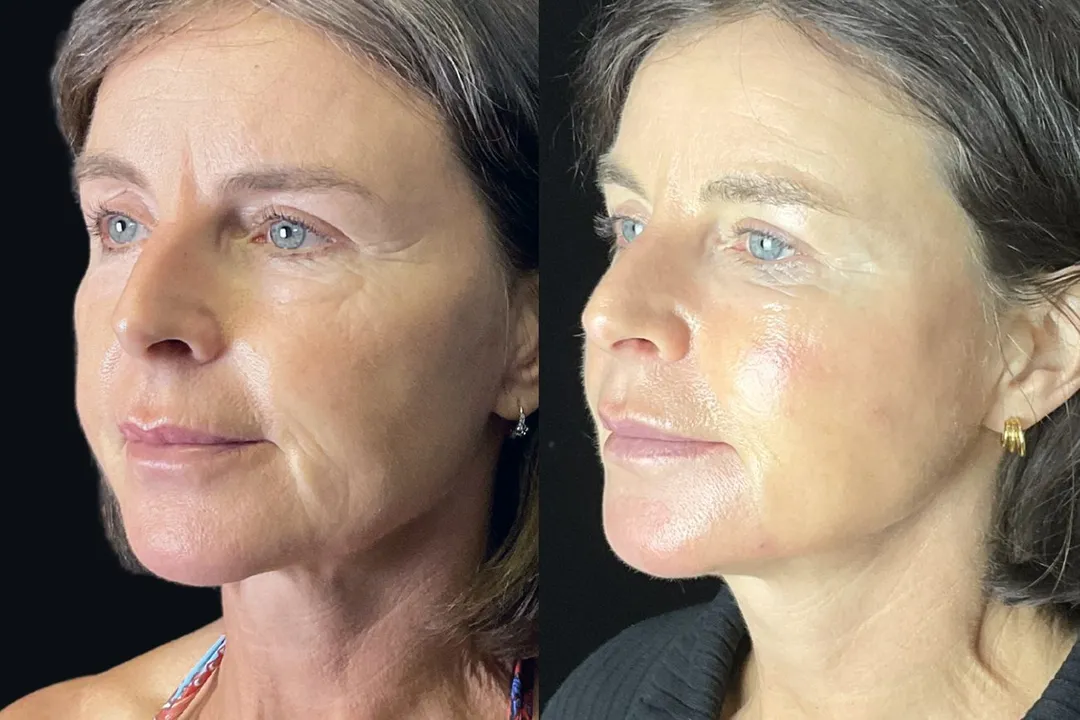
Photodamage rarely appears uniformly; it tends to show up most clearly on chronically exposed areas like the face, neck, chest, hands, and arms. [2][9] The visual evidence can be complex, involving changes to color, texture, and structure simultaneously. [8]
Common signs include:
- Pigmentation Issues: This manifests as an uneven skin color, the appearance of dark spots like liver spots (solar lentigines), general hyperpigmentation, and scattered freckles. [2][3][5][9] People with darker skin tones, who have more natural melanin protection, are particularly prone to developing these uneven, patchy pigmentary changes when photodamaged. [2][8]
- Texture & Lines: The breakdown of collagen and elastin leads to the formation of wrinkles and fine lines, particularly around the mouth and eyes. [2][3][5] Skin can become rough, scaly, or exhibit a "crepey" texture, sometimes accompanied by sagging or drooping due to lost elasticity. [2][5][9]
- Vascular Issues: Damage to capillaries can cause redness, blotchiness, and the appearance of visible spider veins, often seen on the nose and cheeks. [2][3][5][7]
- Precancerous Lesions: Perhaps the most serious indicator, sun damage can cause rough, scaly patches known as actinic keratoses (AKs). Untreated AKs carry the risk of developing into squamous cell carcinoma. [2][3][7]
Dermatologists often differentiate damage by the affected layer: epidermal damage is surface-level, dermal damage involves deeper structural loss, and combination damage affects both, often presenting as melasma or generalized uneven tone. [5][9]
# Risk Factors
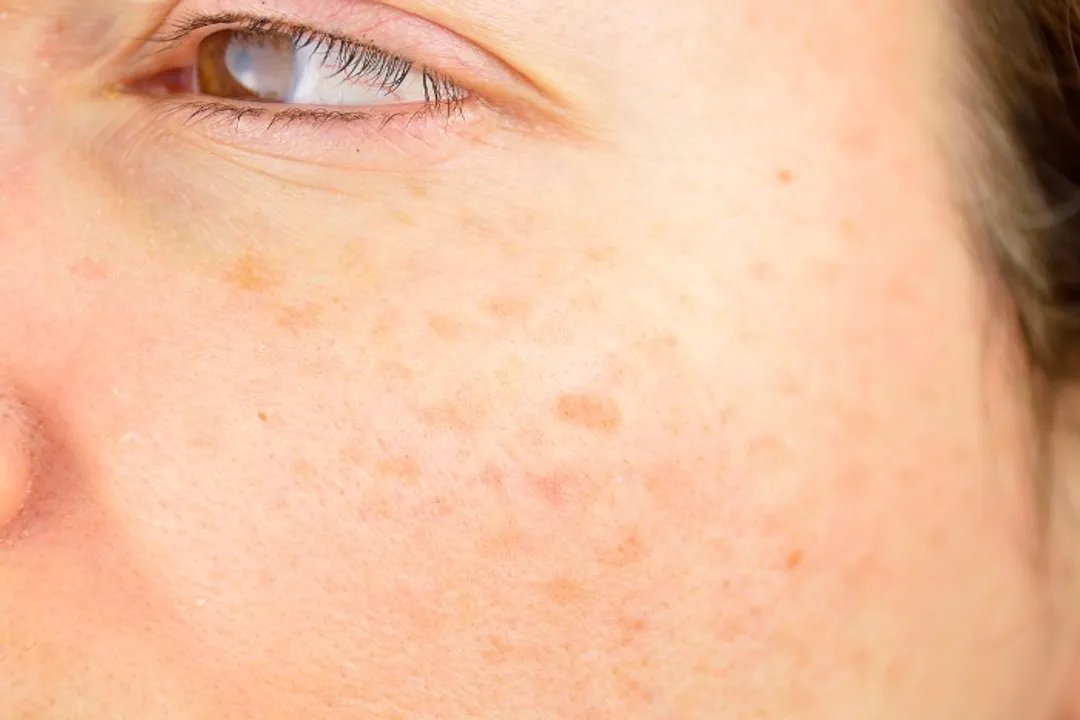
While everyone is susceptible to some degree of photodamage, the severity is highly individualized, depending on the total cumulative unprotected exposure, latitude, and inherent skin type. [2][3] Dermatologists frequently use the Fitzpatrick scale to assess risk. [2] Individuals with lighter skin types (Type I and II) burn easily and are generally more susceptible to the aging effects and skin cancer development. [2][3] In contrast, skin types with higher melanin content (Types IV through VI) benefit from natural protection against rapid aging, though they are still susceptible to damage, which tends to present more noticeably as pigmentary changes. [3][8]

# Prevention First

Since complete reversal of existing photodamage is not possible, the most powerful tool against photoaging is stopping further injury. [2][6][9] This means integrating sun protection into daily life, even when the weather is overcast or the individual is indoors near windows. [6]
The cornerstone of this defense is broad-spectrum sunscreen that protects against both UVA and UVB rays. [3][6] Dermatologists generally recommend a minimum of SPF 35 for daily use, with many suggesting SPF 50 or higher, especially in summer months. [2][5][9] Reapplication is non-negotiable—every two hours, or sooner if swimming or sweating heavily. [2]
It is worth noting the difference in protection mechanisms. Mineral sunscreens, using zinc oxide or titanium dioxide, sit on the skin and physically reflect rays, offering protection immediately upon application. [8] Chemical sunscreens, conversely, need time to absorb and activate. [8] For those concerned about cosmetic elegance or skin tone matching, newer zinc oxide formulations are now available that apply more transparently, and those containing iron oxides can offer a subtle color-correcting effect that helps camouflage existing uneven pigmentation. [8] When considering your daily routine, remember the order matters: apply your skincare, then your sunscreen, and only then, if desired, your makeup. [2] Think of makeup SPF as a bonus layer, not the main defense. [2]
Beyond topical protection, physical barriers are essential. Sun-protective clothing, labeled with an Ultraviolet Protection Factor (UPF) of 30 or higher, offers reliable defense. [2][6] Pair this with wide-brimmed hats to shield the scalp and neck, and large sunglasses to protect the delicate skin around the eyes from developing fine lines and spots. [2][6][8] Avoiding peak sun hours (often 10 AM to 2 PM or 4 PM) is also a key behavioral change that minimizes the highest intensity exposure events. [6][8] Lifestyle factors like avoiding tobacco smoke and consuming antioxidant-rich foods like fresh fruits and vegetables can further bolster the skin’s internal resilience against environmental stress. [8]
When assessing the commitment required for a treatment plan, it’s useful to view the maintenance phase through a spectrum of effort. For example, topical retinoids, often considered the gold standard for at-home care, require consistent daily application to stimulate collagen and improve texture over many months. [4][8] In contrast, procedures like CO2 laser resurfacing can result in immediate, notable improvement after a recovery period of one to three weeks, with results sometimes lasting three to five years. [1] This highlights that at-home routines demand daily diligence for incremental gain, whereas in-office treatments demand a dedicated short period of downtime for more substantial, though not permanent, structural correction.
# Corrective Procedures

Once damage has occurred, professional treatments target specific manifestations—whether it’s pigment, texture, laxity, or precancerous growths. [3][5]
# Topical Resurfacing
For early or light photodamage, topical medications can offer noticeable results. [6] The prescription topical retinoid, such as tretinoin, stands out for its ability to even out skin tone, smooth texture, and minimize fine lines by stimulating collagen production in the dermis. [2][4][8] Supporting ingredients like Vitamin C and other antioxidants (like Vitamin E, selenium, or tea polyphenols) are incorporated into routines to combat the free radical damage that UVA light initiates. [4][8]
# Energy Devices
Various light-based devices target different chromophores (color targets) and structural components:
- Intense Pulsed Light (IPL): This technique uses visible light pulses specifically aimed at reducing visible red and brown colors, like broken capillaries and dark spots. [1]
- Lasers: Lasers offer more focused energy. The Alexandrite laser is used to selectively fade pigmented areas, while picosecond and nanosecond lasers also address pigmentation concerns. [1][3] For structural remodeling without immediately vaporizing the skin surface, the 1540 nm laser deposits energy columns to encourage collagen remodeling. [1]
- Resurfacing Lasers: For significant textural improvement and wrinkle reduction, lasers that induce controlled injury are employed. CO2 laser resurfacing penetrates the surface to promote new collagen formation, effectively removing older, sun-damaged skin, though this requires one to three weeks of recovery time. [1] Fractional resurfacing lasers offer a similar goal of improving lines, texture, and pores through energy delivery. [1][3] Newer devices like Tixel can be tailored with ablative or non-ablative settings to achieve results with potentially less associated downtime than traditional lasers. [5]
# Skin Shedding
Chemical peels utilize acidic substances, like glycolic or trichloroacetic acid, to selectively destroy the damaged top layer of skin. [1][2] This process encourages the growth of newer, smoother skin underneath, helping to reduce hyperpigmentation and treat actinic keratoses, though downtime can range from none to nearly two weeks depending on the strength of the peel used. [1][2]
# Cellular Correction
For precancerous lesions, Photodynamic Therapy (PDT) is a specialized approach. [4] A topical medication is applied to the area, then activated by a specific blue or red fluorescent light, which destroys the precancerous cells while sparing surrounding healthy tissue. [2][7] This method has also been shown to promote natural collagen production. [4] For precancerous spots that are not responding to other methods, Cryotherapy—freezing the spots with liquid nitrogen—can cause them to darken and shed off the skin within days. [2][3]
# Volume and Laxity
To address the laxity, sagging, and deep wrinkles caused by collagen loss, other modalities come into play. Injectable dermal fillers, often containing hyaluronic acid, can physically fill volume deficits while also stimulating the production of new collagen. [5][7] Muscle relaxants (like Botox) address dynamic wrinkles caused by muscle movement in the upper face. [5] Additionally, devices using radiofrequency (RF), HIFU (High-intensity focused ultrasound), and Micro-needling RF are used specifically to tighten the skin by boosting collagen production. [7][8] Polynucleotides are also utilized as they stimulate the skin's cells to produce more collagen and elastin. [5]
It is important to recognize that the complexity of photodamage often necessitates an integrated strategy. Targeting isolated symptoms—such as using IPL solely for red spots or fillers only for wrinkles—will yield only partial results. A more satisfying cosmetic outcome is frequently achieved when a practitioner combines treatments that address different damage dimensions—color correction via light therapy, textural improvement via lasers or peels, and structural support via energy devices or injectables—all while maintaining rigorous daily sun protection.

# Final Steps
While dermatologists can offer significant improvement across the spectrum of signs associated with sun exposure, they must always first evaluate the skin to rule out or treat precancerous conditions or skin cancers. [3][7] The best long-term results stem from a treatment plan that is carefully tailored to the individual’s specific skin type and the severity of their damage. [8] Committing to the chosen course of treatment, whether it is a long-term topical regimen or a series of in-office procedures, combined with an unwavering dedication to daily sun protection, is the only way to minimize the visible impact of past exposure and safeguard the skin going forward. [1][6]
Related Questions
#Citations
Photoaging (Sun Damage) | Fact Sheets - Yale Medicine
Current and New Treatments of Photodamaged Skin - PubMed
Photoaging (Sun Damage) - Dermatology Associates
Sun Damage - Department of Dermatology » College of Medicine »
Photodamage: How to get rid of Photoaging - Westlake Dermatology
Damaged Skin | The Cosmetic Skin Clinic
How dermatologists treat sun-damaged skin
Photodamage Wrinkle Treatment In Gainesville, FL
A Dermatologists' Guide To Photodamage And Dark Skin