Which component replaces nitrogen in atmospheric air to form Heliox?
Answer
Helium
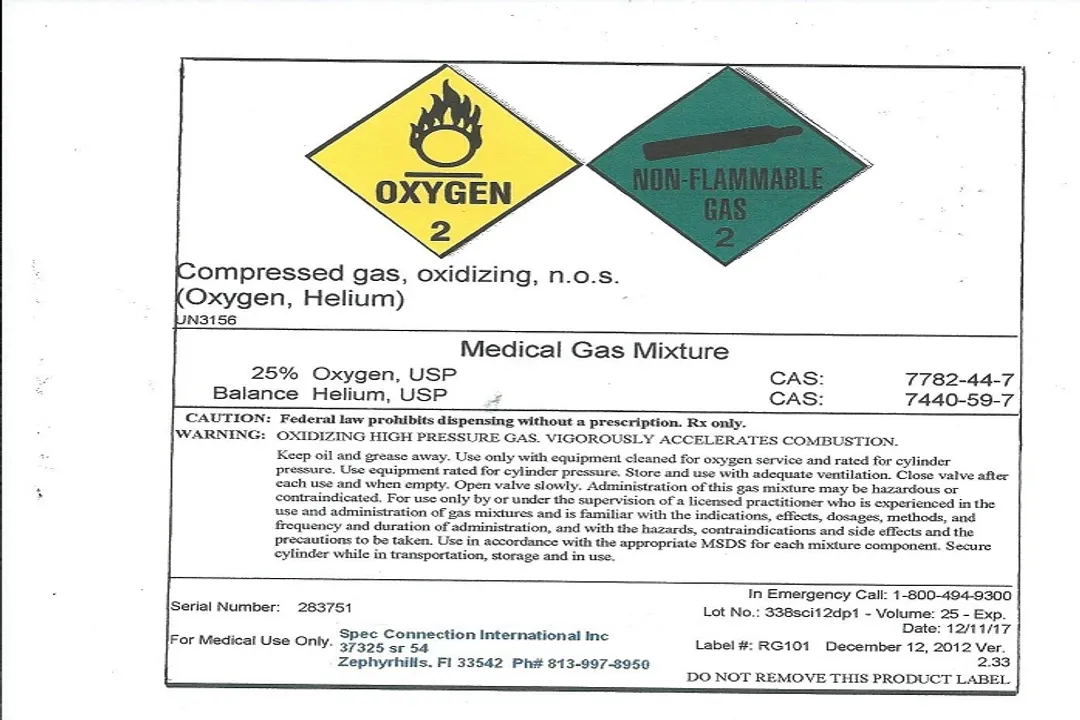
Heliox is fundamentally a precisely manufactured combination of helium (He) and oxygen ($ ext{O}_2$). Atmospheric air normally contains approximately 78% nitrogen. The therapeutic and physical benefits of Heliox stem from substituting this relatively heavy nitrogen component with significantly lighter helium. Because helium possesses a much lower density than nitrogen, replacing it results in a gas mixture that is less dense than atmospheric air, which is the primary mechanism for reducing respiratory resistance.
Related Questions
What regulatory status is consistently marked on Heliox product labeling?Which component replaces nitrogen in atmospheric air to form Heliox?In which airflow regime does Heliox offer the most substantial reduction in resistance?What immediate, temporary side effect results from the faster travel of sound waves in helium?If using an oxygen flowmeter to deliver an 80/20 Heliox blend, what adjustment is needed for the indicated reading?Which medical condition is a primary indication for Heliox use involving laryngeal issues?What specific function do built-in oxygen analyzers serve in specialized Heliox delivery systems?What is the primary physiological role of the 70/30 Heliox blend compared to air?Why might the clinical benefit of adding Heliox be less pronounced for patients already on mechanical ventilation for profound obstruction?What is the fundamental goal of Heliox therapy regarding the patient's respiratory system?