What is the definition of quarantine?
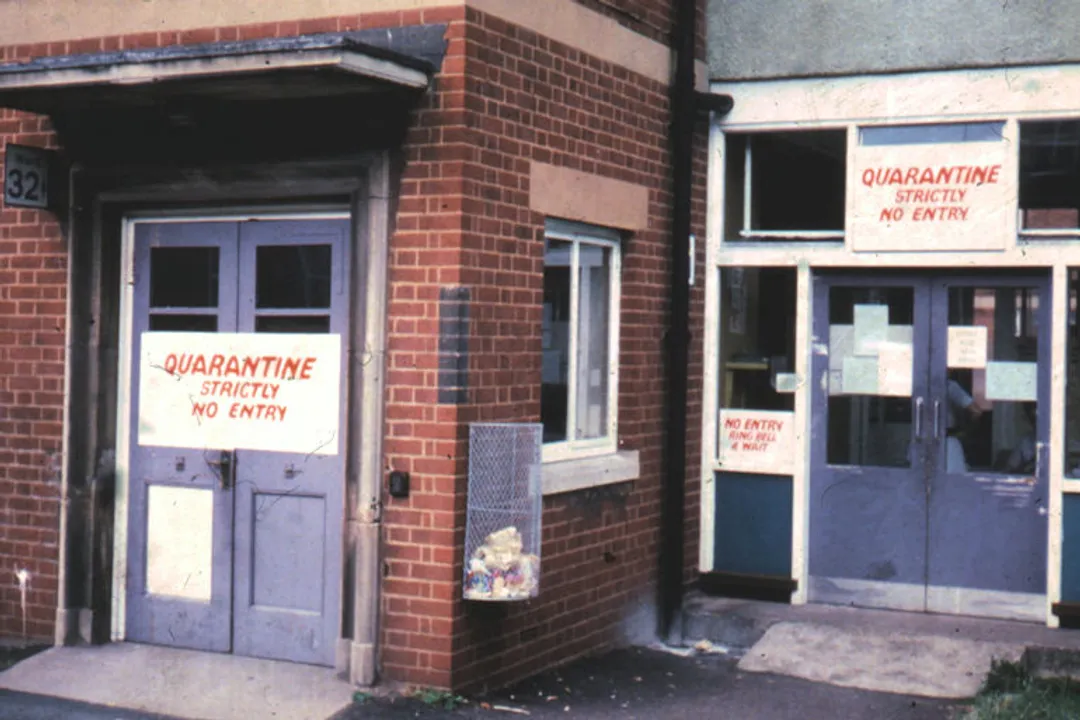
The act of quarantine involves the restriction of movement for individuals, animals, or even goods to prevent the spread of disease or pests. At its most fundamental, it is a public health strategy focused on separation. This measure is applied when there is a suspicion or known exposure to a contagious agent, aiming to contain potential spread before an illness can manifest or be transmitted further. While often discussed in the context of recent global health crises, the concept is an established mechanism of preventive medicine, designed to interrupt the transmission chain of infectious diseases.
# Action Definition

Fundamentally, quarantine is about controlling the potential for contagion by limiting the liberty of movement for those who might be carriers, even if they are currently asymptomatic. Different authoritative sources share a common understanding, though they might emphasize slightly different components. For example, one definition highlights keeping a person or animal separated from others to stop the passage of disease, while another focuses specifically on restricting the movement of people and goods that have been in contact with an infectious agent. This action is not necessarily punitive; rather, it is a calculated, often mandatory, public health intervention. The term itself speaks to a period of observation or detention imposed due to potential exposure, rather than confirmed sickness.
# Forty Days
The historical precedent for quarantine is quite precise, tracing back to maritime practices centuries ago. The word itself derives from the Italian quarantena, meaning a period of forty days. This standard was famously adopted in the mid-14th century in Venice, which required ships arriving from plague-infected areas to anchor offshore for a period before docking. The rationale behind the selection of forty days is subject to historical debate, but it served as an empirically determined timeframe long enough to observe whether an infection would develop in the crew or passengers. This early model established the essential components: separation and a fixed duration based on disease incubation periods. These historical actions laid the groundwork for quarantine as a recognized, proactive measure in communicable disease control.
# Separation Difference
One of the most common points of confusion in public health discussions involves distinguishing quarantine from isolation. While both involve keeping people apart to manage disease spread, the target population for each measure is fundamentally different.
Isolation is strictly reserved for individuals who are already known to be sick with a contagious disease. The purpose is to separate the confirmed case from the general population to stop them from spreading the illness they currently have.
Quarantine, conversely, applies to individuals who have been exposed to a contagious disease but are not yet sick or whose infection status is unknown. The goal is to keep them separated during the incubation period to monitor for symptoms and prevent them from unknowingly spreading the disease if they do become infectious.
To illustrate this critical difference, consider the differing obligations placed upon individuals:
| Status | Population Targeted | Primary Goal | Symptom Status |
|---|---|---|---|
| Quarantine | Exposed but well contacts | Determine if illness develops | Asymptomatic or monitoring |
| Isolation | Confirmed sick individuals | Prevent onward transmission | Symptomatic and ill |
This functional difference dictates the public health response. Quarantine focuses on potential spreaders, whereas isolation focuses on confirmed spreaders. An individual under quarantine is expected to monitor themselves diligently for symptoms, as the transition from quarantined to isolated status is dependent upon the appearance of illness.
# Public Tool
Quarantine functions as a non-pharmaceutical intervention (NPI), meaning it is a public health action taken without the use of drugs or vaccines. It represents a significant, non-medical means of controlling the movement of pathogens in the community. Historically, it was a primary defense against outbreaks like the plague. Today, its application is formalized within public health regulations, often involving governmental authority to mandate these restrictions when necessary to protect broader community health. While the concept applies to people, the scope, as noted in older understandings, also extends to goods, which could be subject to inspection or restriction if they were suspected of carrying pests or pathogens.
In modern contexts, the implementation of quarantine often requires significant community buy-in, extending beyond mere legal compliance. When authorities recommend or mandate staying home, they are essentially asking healthy individuals to accept a temporary limitation on personal freedom—a restriction on their right to move freely in commerce, work, and social life—for the collective benefit. The success of this public measure relies heavily on the public's experience and trust in the scientific and governmental bodies enforcing it. If compliance wanes due to perceived unfairness or lack of clear communication regarding the risk level, the effectiveness of quarantine as a containment strategy rapidly diminishes, forcing a heavier reliance on more restrictive measures later on.
# Individual Impact
For the person undergoing quarantine, the experience often centers on behavioral modification for a set duration. This typically involves staying home and strictly avoiding contact with others, including those living in the same household in some high-risk scenarios. While not ill, the individual is restricted from activities like attending work, school, or public gatherings. During this time, the main actionable steps involve meticulous self-monitoring—checking temperature and looking for the development of characteristic symptoms associated with the specific disease exposure. The entire process is fundamentally about risk mitigation based on the biological reality of an incubation period—the time between exposure and the onset of symptoms.
It is worth noting that the duration of quarantine is scientifically determined based on the known incubation period of the pathogen in question. A common structure for making this time meaningful for the public involves creating a simple checklist for self-management during the restricted period.
# Quarantine Self-Checklist
- Know Your Dates: Confirm the exact start and end date based on the last known exposure time provided by health officials.
- Strict Separation: Avoid all non-essential outings and interactions with others outside your immediate, designated isolation area (if applicable).
- Daily Symptom Log: Check your temperature twice daily and note any developing symptoms (e.g., cough, fever, fatigue).
- Clear Communication: Have a plan to immediately contact a healthcare provider or public health authority if symptoms appear, and strictly follow their instructions for testing or transitioning to isolation.
Understanding that quarantine is a holding pattern based on incubation science, rather than a punishment for being sick, helps maintain mental fortitude during the period of enforced separation. The difference between an established, clear protocol and vague directives significantly influences how well a person adheres to the restrictions over time. If the public perceives the mandate as an arbitrary detention rather than a time-bound, evidence-based procedure—rooted in the known science of how long a disease takes to incubate—compliance suffers, which ironically threatens the very public health goal the quarantine was intended to achieve.
Related Questions
#Citations
QUARANTINE Definition & Meaning - Merriam-Webster
Quarantine - Wikipedia
QUARANTINE | definition in the Cambridge English Dictionary
What is the difference between isolation and quarantine? - HHS.gov
ISOLATION AND QUARANTINE: CONTAINMENT STRATEGIES ...
Quarantine | Research Starters - EBSCO
Quarantine | Definition, Origin, Procedures, & Facts - Britannica
QUARANTINE Definition & Meaning - Dictionary.com
What you should know about quarantine - OSF HealthCare
Quarantine - an overview | ScienceDirect Topics