What exactly is SIDA?
The sudden, unexplained death of an infant younger than one year old that remains unexplained even after a thorough investigation is what defines Sudden Infant Death Syndrome, or SIDS. This diagnosis, sometimes referred to as "crib death," is made only after standard procedures have ruled out other possible causes for the passing. These procedures typically involve a complete autopsy, a detailed review of the infant’s clinical history, and a careful examination of the scene where the death occurred. Because it is essentially a diagnosis of exclusion, the term SIDS encapsulates deaths for which no specific cause, such as infection, trauma, or congenital defect, can be identified.
# Diagnosis Rules
It is important for parents and caregivers to understand that SIDS is a specific medical classification, not a general term for any unexpected infant death. For instance, if an infant dies due to suffocation from loose bedding, it is categorized as a sleep-related death, but not SIDS, assuming the cause is found. Similarly, if an autopsy reveals an underlying, undiagnosed medical condition, the death is attributed to that specific condition rather than SIDS. A key distinguishing feature is the time frame: SIDS almost exclusively affects infants under one year of age. Statistically, the majority of SIDS deaths occur when an infant is between one and four months old, with about half of all cases occurring by the second month of life.
# Statistical Patterns
While the incidence of SIDS has thankfully declined significantly in many developed nations since the early 1990s—a reduction largely attributed to increased awareness and promotion of safe sleep practices—it remains a leading cause of post-neonatal mortality. Understanding the typical circumstances surrounding these tragedies helps guide prevention efforts. For example, a higher percentage of SIDS events occur during sleep. Furthermore, male infants appear to be affected slightly more often than female infants. Another commonality noted in investigations is that many SIDS deaths occur during the winter months.
# Underlying Theories
Since SIDS cannot be tied to a single definitive cause, researchers generally coalesce around the Triple-Risk Model to explain its occurrence. This model posits that SIDS happens only when three factors align simultaneously: a vulnerable infant, a critical developmental period, and an outside stressor.
The vulnerable infant component suggests an underlying biological predisposition, perhaps a subtle abnormality in the brain stem that controls arousal, breathing, and heart rate. This vulnerability might not be apparent until the infant is in a specific, critical developmental phase—often between two and four months—when their respiratory and cardiac control systems are rapidly maturing. The final component is the external stressor, which is often an environmental factor that overwhelms the infant's fragile control systems, such as sleeping prone (on the stomach) or overheating. If any one of these three elements is missing, the infant is less likely to succumb to SIDS.
# Identified Risk Factors
While the exact mechanism remains unknown, decades of research have established several strong, modifiable, and non-modifiable risk factors associated with SIDS.
Non-modifiable risk factors relate to the infant’s inherent state or background:
- Sex: Being male.
- Age: Being between one and four months old.
- Prematurity/Low Birth Weight: Infants born prematurely or with low birth weight carry an increased risk.
- Family History: Having a sibling or previous infant die of SIDS slightly increases the risk for subsequent children.
Modifiable risk factors are those related to the infant’s environment or caregiving practices, which offer the best targets for prevention:
- Stomach Sleeping (Prone Position): This is one of the most significant modifiable risk factors. Sleeping on the stomach makes it harder for the infant to wake up if their airway becomes blocked or if they re-breathe exhaled air containing too much carbon dioxide.
- Soft Bedding/Surfaces: Placing an infant on soft surfaces, such as waterbeds, soft mattresses, pillows, or thick comforters, increases the risk of suffocation or rebreathing.
- Bed-Sharing (Co-sleeping): Sharing a sleep surface with the infant is discouraged, especially if parents smoke, have consumed alcohol or drugs, or are extremely fatigued, as the risk of accidental suffocation or overlay increases significantly.
- Overheating: Too many layers of clothing or an overly warm room can be dangerous.
- Maternal Smoking: Smoking during pregnancy or exposure to secondhand smoke after birth is strongly linked to SIDS risk.
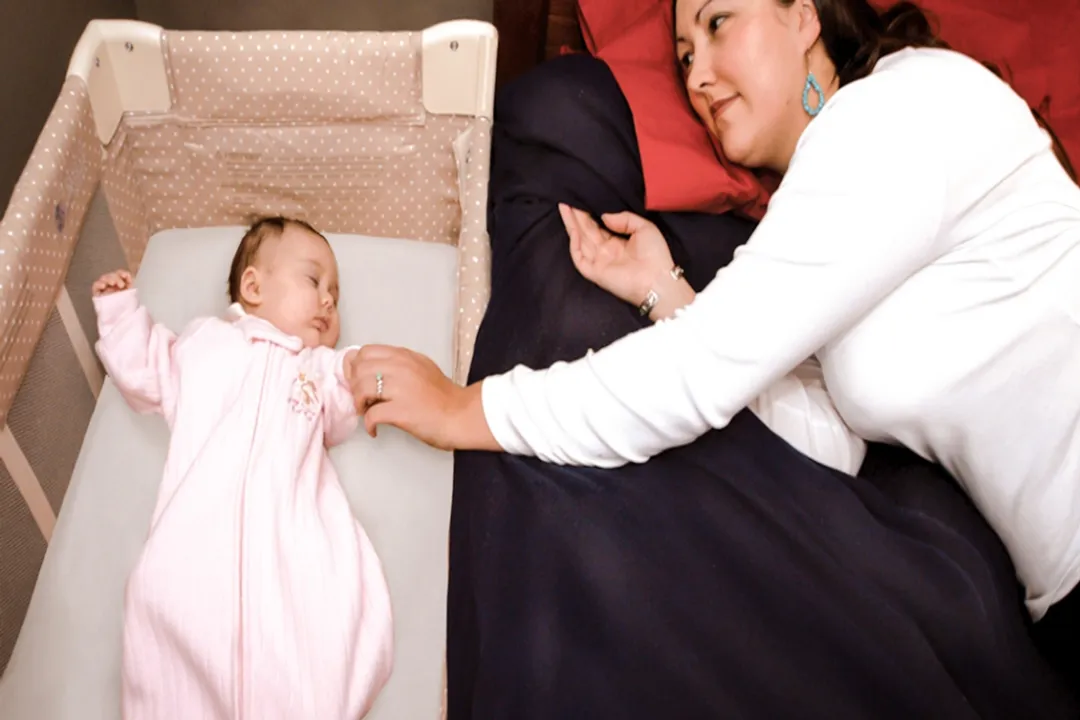
It is worth noting the distinction between bed-sharing and room-sharing. While the American Academy of Pediatrics (AAP) strongly advises against sharing the same sleep surface as the infant, they do recommend that the infant sleep in the parents’ room, close to the parents’ bed, but on a separate, firm sleep surface (like a crib or bassinet) for at least the first six months, and ideally for the first year.
If we were to create a tiered risk assessment based on typical guidelines, a newborn sharing a queen-sized bed with two parents, one of whom is a smoker, represents a convergence of several high-risk modifiable factors, making it a situation requiring immediate change, whereas an infant sleeping alone on a firm crib mattress in the same room presents the lowest environmental risk profile. This contrast highlights how much control caregivers have over the immediate sleep environment.
# Safe Sleep Directives
The overwhelming consensus among medical bodies is that adherence to safe sleep guidelines drastically reduces the risk of SIDS. The ABCs of safe infant sleep provide a simple, memorable checklist for caregivers: Alone, on their Back, in a Crib (or bassinet/pack-n-play).
# Back Sleeping
The instruction to place infants to sleep on their back is perhaps the single most effective intervention against SIDS. Parents must ensure the baby is placed on their back for every sleep, including naps. Once an infant can consistently roll from back to tummy on their own, they may be allowed to find their own position, but they should always be placed to sleep on their back initially.
# Alone and Clear
The sleeping area for the infant must be clear of all hazards. This means no loose bedding, blankets, pillows, bumper pads, stuffed animals, or heavy quilts inside the crib. The mattress should be firm and covered only by a tightly fitted sheet. While some parents worry about their infant getting cold, a lightweight wearable blanket or sleep sack is the appropriate way to keep them warm, eliminating the need for loose blankets.
# Crib Environment
The sleep surface itself needs scrutiny. The crib should meet current safety standards. One often-overlooked area involves travel or secondary sleep spaces. When traveling, parents should bring a portable crib or bassinet that meets safety standards, rather than relying on hotel bedding or improvised setups. Even in the home, avoiding the use of infant slings or car seats for routine sleep is advisable, as the baby's head can slump forward, potentially compromising the airway.
# Room Setup
As mentioned, room-sharing without bed-sharing is highly recommended. Keeping the baby nearby allows parents to respond more quickly to feeding cues or distress but removes the risks associated with an adult rolling over or having blankets encroach on the baby's space. The room temperature should be kept comfortable for a lightly clothed adult—not too hot—and parents should avoid placing the crib directly next to heating vents or in direct sunlight.
# Addressing Misconceptions
Public health campaigns have worked hard to combat common myths surrounding SIDS and safe sleep. One persistent issue is the belief that placing a baby on their stomach aids digestion or prevents choking if they spit up. Medical evidence strongly refutes this; placing a baby on their back is safer, even for babies who spit up frequently, because the airway anatomy is better protected in that position. Furthermore, some cultural practices or historical advice sometimes suggest swaddling or using blankets for warmth. While swaddling can be a comforting technique, it must cease as soon as the infant shows any sign of attempting to roll over, and should never be done if the baby is sleeping prone.
If you are struggling to keep your baby on their back, it can be helpful to use sleep sacks or sleep positioners that prevent rolling, provided they are manufactured and used according to safety guidelines—though the AAP’s primary recommendation remains focused on the back position, not restrictive devices. A practical tip for concerned parents, beyond the standard ABCs, is to introduce a pacifier at naptime and bedtime after breastfeeding is well established (usually around 3-4 weeks). Studies suggest that pacifier use is associated with a lower risk of SIDS, even if it falls out during sleep.
# Beyond Prevention Support
While the focus is rightfully placed on preventative measures, the emotional reality of SIDS is devastating for families. Organizations exist to support those who have experienced the loss of a child to SIDS. These support services recognize that grief from SIDS can be complicated by the desire to find a specific reason why the death occurred, often feeling compounded by the knowledge that risk factors might have been present. Access to trained counselors and peer support groups can be vital resources for parents, siblings, and family members navigating this unique and profound form of grief.
# Summary of Key Considerations
To synthesize the most critical takeaways regarding SIDS:
| Aspect | Finding/Recommendation | Source of Risk |
|---|---|---|
| Position | Always place baby on back to sleep. | Prone sleeping impairs arousal/breathing. |
| Surface | Use a firm mattress with only a tight sheet. | Soft surfaces increase suffocation/rebreathing risk. |
| Environment | Keep crib clear of all soft objects, toys, and loose bedding. | Loose items pose entanglement/suffocation hazards. |
| Location | Room-share, but never bed-share. | Bed-sharing increases overlay/suffocation risk. |
| Smoking | Avoid smoking during pregnancy and exposure to secondhand smoke post-birth. | Smoking is a major, independent risk factor. |
Understanding SIDS moves past a simple mystery; it involves acknowledging a triple vulnerability and actively managing the environmental factors we can control. While we cannot test for the brain stem abnormality that might predispose an infant, we can universally implement the safe sleep protocols that effectively remove the external triggers believed to set the fatal chain of events in motion.
#Videos
What is SIDS? | Boston Children's Hospital - YouTube
Related Questions
#Citations
SIDS (Sudden Infant Death Syndrome) - Cleveland Clinic
SIDS - Wikipedia
Frequently Asked Questions (FAQs) About SIDS and Safe Infant Sleep
What is SIDS? | Boston Children's Hospital - YouTube
Sudden Infant Death Syndrome (SIDS)
Sudden Infant Death Syndrome (SIDS) | Nemours KidsHealth
SIDS | The Children's Hospital at Montefiore
ELI5: What exactly is SIDS (sudden infant death syndrome ... - Reddit
What is SIDS? - Safe to Sleep - NIH